
Health × Storms
Storms and other extreme weather events – such as hurricanes, tropical storms and severe winter storms – can have significant impact on human health. 74% of the population in Massachusetts resides along the coast, making them vulnerable to the damage of storms. Although tropical storms lose strength as they move inland, all regions of the state may experience strong winds and heavy rainfall (ResilientMass Plan, 2023, p. 5.1-46).
Similar to flooding, storms and extreme weather can cause damage to infrastructure such as houses and roads, creating hazards and barriers. Hurricanes and tropical storms for example, can cause power outages that can lead to carbon monoxide (CO) poisoning and medical device failure, and damage to chimneys and damaged or blocked appliance vents may also result in CO buildup in interior spaces. (ResilientMass Plan, 2023, p. 5.1-47). Additionally, the moisture from flooded homes and buildings caused by storms can result in the growth of mold, which can cause allergic reactions and respiratory illness. The populations that are vulnerable to the health impacts of mold include children under 5, people with compromised immune systems, people with allergies, and people with respiratory conditions such as asthma (MEPHT, 2024).
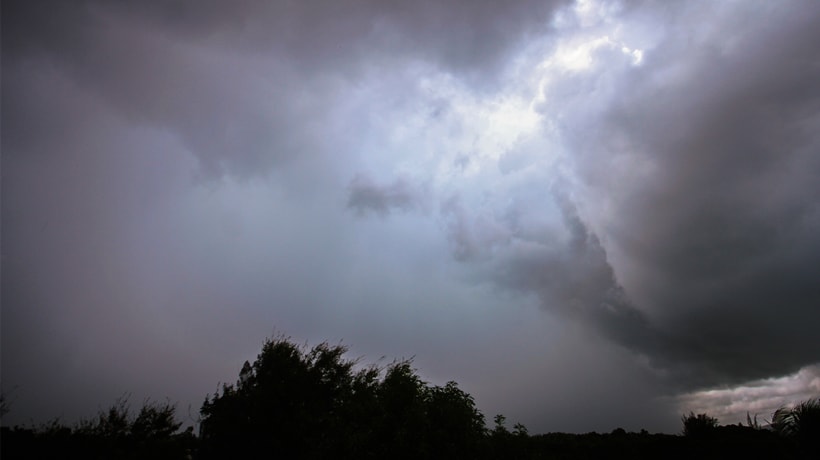
Photo Credit: Shutterstock
Severe winter storms such as ice storms, nor’easters, and heavy snow are common events that happen in Massachusetts, with coastal communities being particularly vulnerable from the combination of high winds, waves, and tidal surge (ResilientMass Plan, 2023, p. 5.1-54). During winter storms, there is increased risk of hypothermia and frostbite for individuals who lack access to housing or heat, which includes the estimated 18,400 people experiencing homelessness in Massachusetts (ResilientMass Plan, 2023, p. 5.1-55).
Additionally, when it comes to storms and extreme weather events, some populations may have greater difficulty in preparation, evacuation, and recovery such as people of color, people who are language isolated, people who are low-income, older adults, and those living with disabilities (ResilientMass Plan, 2023, p. 5.1-47).
Storms and other extreme weather events – such as hurricanes, tropical storms and severe winter storms – can have significant impact on human health. 74% of the population in Massachusetts resides along the coast, making them vulnerable to the damage of storms. Although tropical storms lose strength as they move inland, all regions of the state may experience strong winds and heavy rainfall (ResilientMass Plan, 2023, p. 5.1-46).
Similar to flooding, storms and extreme weather can cause damage to infrastructure such as houses and roads, creating hazards and barriers. Hurricanes and tropical storms for example, can cause power outages that can lead to carbon monoxide (CO) poisoning and medical device failure, and damage to chimneys and damaged or blocked appliance vents may also result in CO buildup in interior spaces. (ResilientMass Plan, 2023, p. 5.1-47). Additionally, the moisture from flooded homes and buildings caused by storms can result in the growth of mold, which can cause allergic reactions and respiratory illness. The populations that are vulnerable to the health impacts of mold include children under 5, people with compromised immune systems, people with allergies, and people with respiratory conditions such as asthma (MEPHT, 2024).
Photo Credit: Shutterstock
Severe winter storms such as ice storms, nor’easters, and heavy snow are common events that happen in Massachusetts, with coastal communities being particularly vulnerable from the combination of high winds, waves, and tidal surge (ResilientMass Plan, 2023, p. 5.1-54). During winter storms, there is increased risk of hypothermia and frostbite for individuals who lack access to housing or heat, which includes the estimated 18,400 people experiencing homelessness in Massachusetts (ResilientMass Plan, 2023, p. 5.1-55).
Additionally, when it comes to storms and extreme weather events, some populations may have greater difficulty in preparation, evacuation, and recovery such as people of color, people who are language isolated, people who are low-income, older adults, and those living with disabilities (ResilientMass Plan, 2023, p. 5.1-47).
Questions to Answer
The questions and guided explorations below are designed to assist you with thinking about how storms may impact human health. Use the Health x Storms worksheet to assist you when answering these questions.
The questions and guided explorations below are designed to assist you with thinking about how storms may impact human health. Use the Health x Storms worksheet to assist you when answering these questions.
Heavy wind and rain from storms can cause damage to critical infrastructure leading to power outages which can have significant impacts on human health. During power outages, many people turn to alternative sources of energy for heating, cooling, or cooking. Appliances such as stoves, generators, and lanterns can produce carbon monoxide (CO), an odorless and colorless gas. If these appliances are used in enclosed or partially enclosed spaces, the CO can build up, poison and can cause death if breathed in (CDC, 2024).
During a power outage, loss of refrigeration may cause food-borne illness. Water purification systems may also be down making it unsafe to consume water (CDC, 2024). Also, some people may take medications that require refrigeration such as insulin or utilize medical devices that require electricity such as breathing machines, power wheelchairs, and electric beds (MEPHT, 2024). Not being able to take medications or utilize medical devices can have significant health impacts including worsening chronic conditions and limiting mobility.
In addition to people over 65, children under 5, pregnant persons, and people with compromised immune systems, research suggests that EJ communities are also at higher risk of negative health outcomes during power outages because they may have less access to back up power (MCCA, 2022, Volume II, p. 67).
Power outages or insufficient heating during severe winter storms can put people at risk of hypothermia. Hypothermia is a condition in which body temperature becomes very low due to prolonged exposure to cold temperatures. Hypothermia is a medical emergency, with signs in adults including shivering, exhaustion, confusion, memory loss, and slurred speech. Those who are most vulnerable to hypothermia include older adults with inadequate access to food, clothing, and heating; babies sleeping in cold rooms; and people who are outdoors for long periods of time including hikers, hunters and people experiencing homelessness (CDC, 2024).
Additionally, during warmer weather, lack of power caused by a storm may increase the risk of heat illness. Heat illness may include symptoms such as muscle cramping, shortness of breath, and weakness. Heat vulnerable populations include children, especially those with asthma, infants, older adults, and pregnant persons (CDC, 2025).
Guided Exercise:
This guided exercise will help you consider ways to protect the health of your most vulnerable community members during storm-caused power outages.
Open the GEAR Health Map and select a municipality. Expand and explore the EJ and Other Priority Populations as you discuss the following:
- Does your local health department or municipality have guides on preventing carbon monoxide (CO) poisoning?
- The CDC provides information on how to prevent CO poisoning.
- Consider the EJ communities within your municipality by turning on the Massachusetts Environmental Justice Neighborhoods layer. Does your municipality have resources for these communities to obtain back up power?
- Does your local health department or municipality have guides on food safety during a power outage? Water safety? Medication safety?
- Consider those in your community that may be the most vulnerable to food spoilage and/or reduced water quality including people over 65, children under 5, pregnant persons, and people with compromised immune systems. How can your community tailor guidance to these populations?
- The CDC also offers guidance for how communities can engage in food, water, and medication safety during power outages.
- Does your local health department or municipality have guides on preventing hypothermia?
- The CDC provides information on how to prevent hypothermia.
- The CDC also provides information on how individuals can prepare for a winter storm.
- Are the facilities in your community that predominantly serve vulnerable populations prepared to protect these individuals during power outages (i.e. Day cares, schools, health centers, and long-term care residences).
- In the map, select the Community Components group and drop down to explore the layers below it which include Long Term Care Residences, Licensed Child Care Programs, and Schools PK-12 layer(s). Select the Community Health Resources group and explore the Community Health Centers layer below it. Select the Climate Hazards group and add the Coastal Flooding and Historic Flood Hazards datasets (to adjust transparency to see the facilities underneath, click on the 3 dots to the right). Are these facilities located in areas prone to flooding during storms?
Read More About Related Impacts in the Massachusetts Climate Change Assessment:
- Health Effects of Extreme Storms and Power Outages page A21 (top impact Greater Connecticut River Valley)
Heavy wind and rain from storms can cause damage to critical infrastructure leading to power outages which can have significant impacts on human health. During power outages, many people turn to alternative sources of energy for heating, cooling, or cooking. Appliances such as stoves, generators, and lanterns can produce carbon monoxide (CO), an odorless and colorless gas. If these appliances are used in enclosed or partially enclosed spaces, the CO can build up, poison and can cause death if breathed in (CDC, 2024).
During a power outage, loss of refrigeration may cause food-borne illness. Water purification systems may also be down making it unsafe to consume water (CDC, 2024). Also, some people may take medications that require refrigeration such as insulin or utilize medical devices that require electricity such as breathing machines, power wheelchairs, and electric beds (MEPHT, 2024). Not being able to take medications or utilize medical devices can have significant health impacts including worsening chronic conditions and limiting mobility.
In addition to people over 65, children under 5, pregnant persons, and people with compromised immune systems, research suggests that EJ communities are also at higher risk of negative health outcomes during power outages because they may have less access to back up power (MCCA, 2022, Volume II, p. 67).
Power outages or insufficient heating during severe winter storms can put people at risk of hypothermia. Hypothermia is a condition in which body temperature becomes very low due to prolonged exposure to cold temperatures. Hypothermia is a medical emergency, with signs in adults including shivering, exhaustion, confusion, memory loss, and slurred speech. Those who are most vulnerable to hypothermia include older adults with inadequate access to food, clothing, and heating; babies sleeping in cold rooms; and people who are outdoors for long periods of time including hikers, hunters and people experiencing homelessness (CDC, 2024).
Additionally, during warmer weather, lack of power caused by a storm may increase the risk of heat illness. Heat illness may include symptoms such as muscle cramping, shortness of breath, and weakness. Heat vulnerable populations include children, especially those with asthma, infants, older adults, and pregnant persons (CDC, 2025).
Guided Exercise:
This guided exercise will help you consider ways to protect the health of your most vulnerable community members during storm-caused power outages.
Open the GEAR Health Map and select a municipality. Expand and explore the EJ and Other Priority Populations as you discuss the following:
- Does your local health department or municipality have guides on preventing carbon monoxide (CO) poisoning?
- The CDC provides information on how to prevent CO poisoning.
- Consider the EJ communities within your municipality by turning on the Massachusetts Environmental Justice Neighborhoods layer. Does your municipality have resources for these communities to obtain back up power?
- Does your local health department or municipality have guides on food safety during a power outage? Water safety? Medication safety?
- Consider those in your community that may be the most vulnerable to food spoilage and/or reduced water quality including people over 65, children under 5, pregnant persons, and people with compromised immune systems. How can your community tailor guidance to these populations?
- The CDC also offers guidance for how communities can engage in food, water, and medication safety during power outages.
- Does your local health department or municipality have guides on preventing hypothermia?
- The CDC provides information on how to prevent hypothermia.
- The CDC also provides information on how individuals can prepare for a winter storm.
- Are the facilities in your community that predominantly serve vulnerable populations prepared to protect these individuals during power outages (i.e. Day cares, schools, health centers, and long-term care residences).
- In the map, select the Community Components group and drop down to explore the layers below it which include Long Term Care Residences, Licensed Child Care Programs, and Schools PK-12 layer(s). Select the Community Health Resources group and explore the Community Health Centers layer below it. Select the Climate Hazards group and add the Coastal Flooding and Historic Flood Hazards datasets (to adjust transparency to see the facilities underneath, click on the 3 dots to the right). Are these facilities located in areas prone to flooding during storms?
Read More About Related Impacts in the Massachusetts Climate Change Assessment:
- Health Effects of Extreme Storms and Power Outages page A21 (top impact Greater Connecticut River Valley)
Social determinants of health are the factors that influence health outcomes. Factors such as healthcare, housing, transportation, and income can influence our health and safety. During storms and extreme weather events, some populations may have greater difficulty in preparation, evacuation, and recovery such as people of color, people who are language isolated, people who are low-income, older adults, and those living with disabilities (Resilient Mass Plan, 2023, p. 5.1-47). For example, because of practices like redlining, a historical discriminatory practice in which loans were refused to certain applicants based on race or ethnicity (National Geographic, 2024), people of color are more likely to live in areas with inadequate infrastructure. This limits their ability to prepare for emergencies and increases risk of harm (Ndugga, Pillai, and Artiga, 2024). Additionally, people who are low income (many of whom are people of color), are more likely to live in homes that are vulnerable to the impacts of extreme weather events, and as a result may experience less protection from disasters, more damage to their homes, and more material losses (SAMHSA, 2017).
Communications is an important part of disaster resilience as it can save lives and reduce injury (FEMA, 2014). People who are language isolated may not be able to access evacuation and preparation information and resources (Ndugga, Pillai, and Artiga, 2024). In addition to language access, communications should also be accessible to people living with disabilities. People who have low vision or hearing loss may not receive communications in an accessible way, which can make it difficult for them to remain informed and gain access to resources available to them (EPA, 2025).
Older adults are also vulnerable to the impacts of disasters as it can disrupt their access to regular healthcare. A report by the CDC found that 93% of older adults have at least one chronic condition (Watson et. al, 2025) and when a disaster strikes, it can make it challenging for these individuals to access healthcare (NIH, 2022).
Guided Exploration:
This guided exploration will help you evaluate whether your community’s emergency preparedness, response, and evacuation plans are reaching all residents.
- Consider who has limited capacity in preparing, evacuating, and recovering from storms. Has your municipality engaged these populations in emergency planning efforts to further understands their needs and barriers involving storm safety?
- How can facilities and community organizations that serve these populations be a part of the emergency planning network?
- What languages are predominately spoken in your community? Are storm preparedness materials translated into those languages?
- DPH offers an extreme weather fact sheet that has information about storms in 16 languages.
- Does your municipality have the capacity to translate time sensitive alerts?
- Are storm preparedness materials and alerts accessible to people with disabilities (visual, auditory, i.e)?
- This guide provides information on accessible communications for people with disabilities.
- Are storm preparedness materials and alerts also tailored to the needs of older adults?
- Does your municipality have multiple communication channels for people who do not have digital access or capacity (radio, television, in-person visits)?
- Do the evacuation protocols for your municipality include options for people who need physical assistance? Are emergency shelters designed for people with disabilities?
- The Americans with Disabilities Act has guidance on supporting people with disabilities during emergencies.
- Does your municipality have programs in place to aid environmental justice communities such as people who are low-income and people of color in storm safety such as back-up power programs?
Read More About Related Impacts in the Massachusetts Climate Change Assessment:
- Health Effects of Extreme Storms and Power Outages page A21 (top impact Greater Connecticut River Valley)
- Emergency Service Response Delays and Evacuation Disruptions page 45
Social determinants of health are the factors that influence health outcomes. Factors such as healthcare, housing, transportation, and income can influence our health and safety. During storms and extreme weather events, some populations may have greater difficulty in preparation, evacuation, and recovery such as people of color, people who are language isolated, people who are low-income, older adults, and those living with disabilities (Resilient Mass Plan, 2023, p. 5.1-47). For example, because of practices like redlining, a historical discriminatory practice in which loans were refused to certain applicants based on race or ethnicity (National Geographic, 2024), people of color are more likely to live in areas with inadequate infrastructure. This limits their ability to prepare for emergencies and increases risk of harm (Ndugga, Pillai, and Artiga, 2024). Additionally, people who are low income (many of whom are people of color), are more likely to live in homes that are vulnerable to the impacts of extreme weather events, and as a result may experience less protection from disasters, more damage to their homes, and more material losses (SAMHSA, 2017).
Communications is an important part of disaster resilience as it can save lives and reduce injury (FEMA, 2014). People who are language isolated may not be able to access evacuation and preparation information and resources (Ndugga, Pillai, and Artiga, 2024). In addition to language access, communications should also be accessible to people living with disabilities. People who have low vision or hearing loss may not receive communications in an accessible way, which can make it difficult for them to remain informed and gain access to resources available to them (EPA, 2025).
Older adults are also vulnerable to the impacts of disasters as it can disrupt their access to regular healthcare. A report by the CDC found that 93% of older adults have at least one chronic condition (Watson et. al, 2025) and when a disaster strikes, it can make it challenging for these individuals to access healthcare (NIH, 2022).
Guided Exploration:
This guided exploration will help you evaluate whether your community’s emergency preparedness, response, and evacuation plans are reaching all residents.
- Consider who has limited capacity in preparing, evacuating, and recovering from storms. Has your municipality engaged these populations in emergency planning efforts to further understands their needs and barriers involving storm safety?
- How can facilities and community organizations that serve these populations be a part of the emergency planning network?
- What languages are predominately spoken in your community? Are storm preparedness materials translated into those languages?
- DPH offers an extreme weather fact sheet that has information about storms in 16 languages.
- Does your municipality have the capacity to translate time sensitive alerts?
- Are storm preparedness materials and alerts accessible to people with disabilities (visual, auditory, i.e)?
- This guide provides information on accessible communications for people with disabilities.
- Are storm preparedness materials and alerts also tailored to the needs of older adults?
- Does your municipality have multiple communication channels for people who do not have digital access or capacity (radio, television, in-person visits)?
- Do the evacuation protocols for your municipality include options for people who need physical assistance? Are emergency shelters designed for people with disabilities?
- The Americans with Disabilities Act has guidance on supporting people with disabilities during emergencies.
- Does your municipality have programs in place to aid environmental justice communities such as people who are low-income and people of color in storm safety such as back-up power programs?
Read More About Related Impacts in the Massachusetts Climate Change Assessment:
- Health Effects of Extreme Storms and Power Outages page A21 (top impact Greater Connecticut River Valley)
- Emergency Service Response Delays and Evacuation Disruptions page 45
Investigate GEAR Map Data Layers
Explore the Health Map to learn more about how inland flooding may impact health in your community. The list at the right provides an overview of selected data layers included in the map, as well as a detailed description of each layer.
Explore the Health Map to learn more about how inland flooding may impact health in your community. The list at the right provides an overview of selected data layers included in the map, as well as a detailed description of each layer.
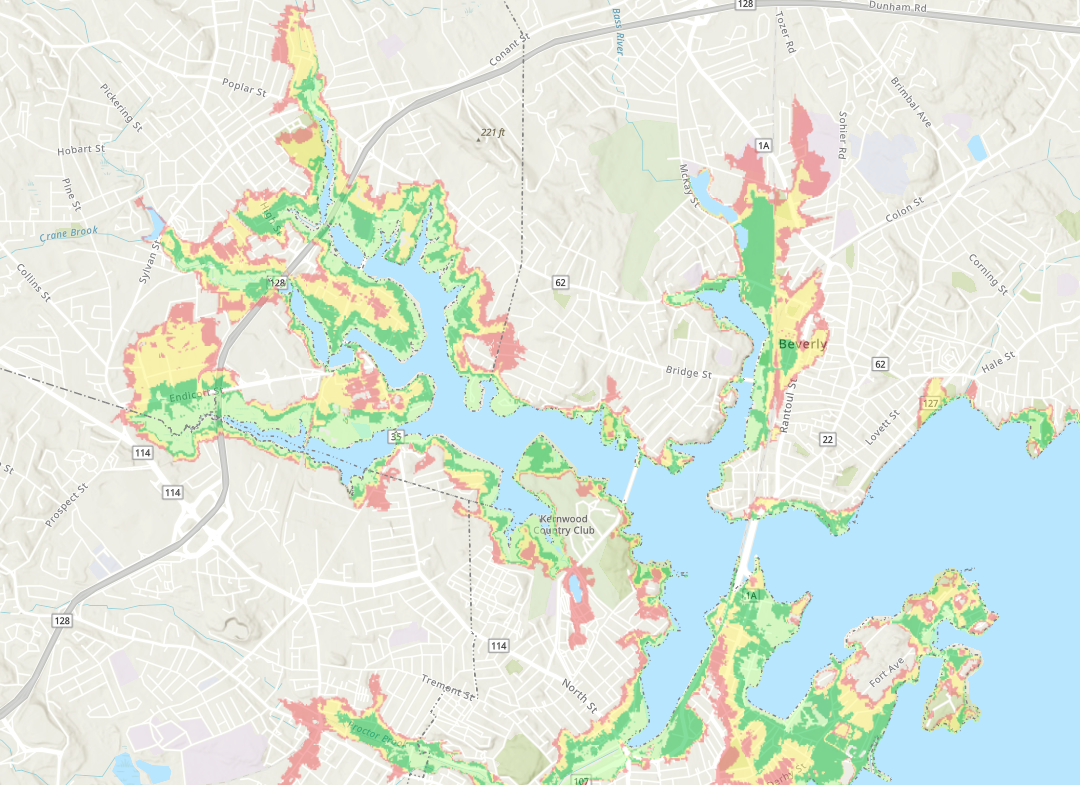

The National Flood Hazard Layer (NFHL) dataset represents the current effective flood risk data for those parts of the country where maps have been modernized by the Federal Emergency Management Agency (FEMA).
As hurricanes become more intense, communities can benefit
from understanding how storms could inundate their coastlines. This layer
represents worst-case Hurricane Surge Inundation areas for Category 1 through 4
hurricanes striking the coast of Massachusetts, based on thousands of modeled
combinations of hurricane intensity (Category 1-4), forward speed, track or
direction, and other factors not including sea level rise. NOAA’s National
Hurricane Center, in partnership with the United States Army Corps of
Engineers, uses the Sea, Lake, and Overland Surges from Hurricanes (SLOSH)
model to calculate the storm surge heights and map coastal areas with the
highest degree of exposure.
As
sea levels rise, communities can benefit from understanding when, where, and
how coastal flooding from sea level rise and storm surge may occur. This layer
provides extents of flooding for the 0.1% annual exceedance probability for
2030, 2050, and 2070 (i.e. the extent that flood waters will reach during a
0.1% event, or a 1 in 1000 chance for any given storm event).
As sea levels rise, communities can benefit from understanding when, where, and how coastal flooding from sea level rise and storm surge may occur. This layer provides extents of flooding for the 1% annual exceedance probability for 2030, 2050, and 2070 (i.e. the extent that floodwaters will reach during a 1 in 100 chance for any given storm event).
Environmental justice (EJ) populations, i.e., block groups are defined in Chapter 8 of the Acts of 2021 and the 2021 EEA EJ Policy. EJ populations are those segments of the population that EEA has determined to be most at risk of being unaware of or unable to participate in environmental decision-making or to gain access to state environmental resources or are especially vulnerable. 2020 block groups, updated in Nov 2022.
Childcare Centers provide care and educational services for their clients, but can also provide essential resources and information. For example, parents and guardians may rely on services which provide their child with social and emotional wellness, meals, and child supervision during work hours. This layer displays information from MassGIS.
This layer contains the locations of licensed
nursing homes, rest homes and assisted living residences in Massachusetts.
Those living and working in these facilities may be more vulnerable to climate
impacts like power outages and heat waves, which can further existing health
and mobility challenges that residents may have and staff persons need to
navigate.
Schools attended by students from
pre-kindergarten through high school provide educational services for those
students, but also provide essential resources and information. For example,
caregivers may rely on services which provide their child with social and
emotional wellness, meals, and before- and after-school care. Schools often
have a strong understanding of food insecurity and other challenges among their
student body. They may also play a role in emergency response.
This layer represents operable electric
generating plants with a capacity of 1 MW or more, and indicates the energy
source. This includes plants that are operating, on standby, or short- or
long-term out of service. Power stations are important because they help meet
rising energy demands, and impacts to power stations from climate hazards such
as flooding and extreme wind events could result in damage and service
interruptions.
Actions to Consider
Communities can take a number of actions to increase resilience to storms. The Climate Resilience Playbook can provide a filtered set of actions related to this GEAR guide. You may also toggle additional filters to find additional actions most relevant for your community.
Communities can take a number of actions to increase resilience to storms. The Climate Resilience Playbook can provide a filtered set of actions related to this GEAR guide. You may also toggle additional filters to find additional actions most relevant for your community.
Explore MVP Projects
FY23 Action Grant
$159,254.93 Award
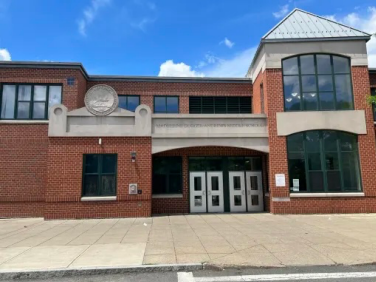
The City of Medford has been working on developing projects for energy resilient facilities to serve our community during grid-disrupting events brought on by climate hazards, such as extreme storms and heat. The Andrews School was identified as the most suitable location for a large-scale emergency shelter due to accessibility, size, and municipal ownership. The MVP grant funding helped to implement an off-grid capable solar plus battery energy storage system at the Andrews Middle School by paying for needed electrical upgrades to the school building. During emergency situations this will allow the site to be used as a warming or cooling shelter, a phone charging location, and a central distribution site. The electrical upgrades will expand the building’s capacity to serve these emergency functions with the existing generator, as well as prepare the building for a future solar plus battery energy storage system.
FY23 Action Grant
$159,254.93 Award
The City of Medford has been working on developing projects for energy resilient facilities to serve our community during grid-disrupting events brought on by climate hazards, such as extreme storms and heat. The Andrews School was identified as the most suitable location for a large-scale emergency shelter due to accessibility, size, and municipal ownership. The MVP grant funding helped to implement an off-grid capable solar plus battery energy storage system at the Andrews Middle School by paying for needed electrical upgrades to the school building. During emergency situations this will allow the site to be used as a warming or cooling shelter, a phone charging location, and a central distribution site. The electrical upgrades will expand the building’s capacity to serve these emergency functions with the existing generator, as well as prepare the building for a future solar plus battery energy storage system.